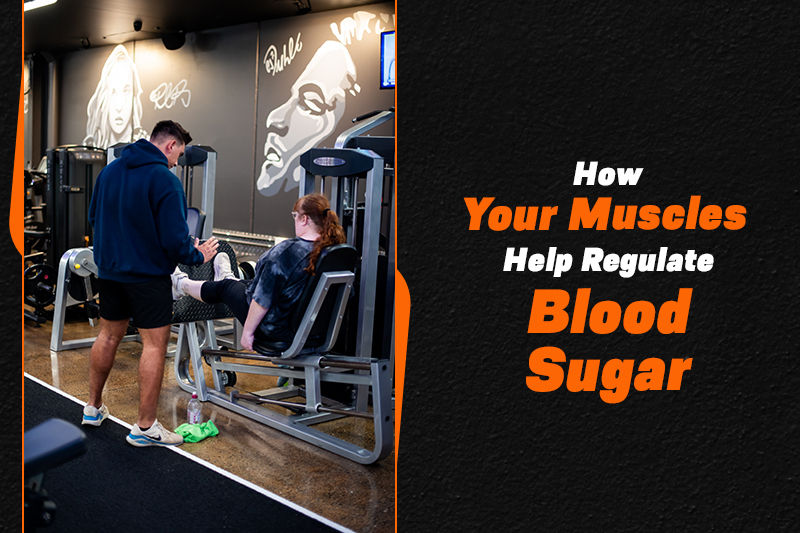
When people think about muscles, they often associate them with strength, movement, or physical appearance. But your muscles have another important job: they play a major role in how your body manages blood sugar. Every time you move, your muscles use glucose for energy, helping your body maintain a healthy balance of blood sugar throughout the day.
This makes muscle health relevant to everyone—not just athletes or people trying to build muscle. Understanding the relationship between exercise, muscle tissue, and blood sugar can help explain why regular physical activity is such an important part of a healthy lifestyle.
Glucose is one of the body's primary sources of energy. After eating carbohydrates, your digestive system breaks them down into glucose, which enters the bloodstream. The hormone insulin then helps move glucose from the blood into cells where it can be used or stored.
Your skeletal muscles are particularly important because they account for a large portion of the body's ability to take up glucose after a meal. When muscles contract during physical activity, they can increase glucose uptake through pathways that are not entirely dependent on insulin.
This means movement gives your muscles an opportunity to use circulating glucose as fuel, helping support healthy blood sugar regulation.
Regular exercise can improve the muscles' ability to respond to insulin. This is often described as improved insulin sensitivity.
When muscles become more responsive to insulin, they can take up glucose more efficiently. This can help the body manage blood sugar more effectively instead of requiring larger amounts of insulin to achieve the same result.
Both cardiovascular exercise and resistance training can contribute to these adaptations. Walking, cycling, running, swimming, weight training, and other forms of physical activity can all challenge the muscles and encourage them to become more metabolically efficient.
For people comparing Shepparton gym prices, it's worth looking beyond equipment and facilities and considering whether a gym provides opportunities for varied, consistent exercise that supports overall health.
Muscle doesn't simply use glucose—it can also store it. After carbohydrates are consumed, some glucose can be converted into glycogen and stored inside muscle cells for later use.
Having healthy muscle tissue therefore provides the body with a larger place to store and utilise glucose. This is one reason maintaining muscle becomes increasingly important throughout adulthood.
Resistance training can help preserve and build muscle, while regular activity helps ensure that those muscles remain active and capable of using stored energy. You don't need to become a bodybuilder to benefit. Maintaining functional muscle is valuable for metabolic health, everyday movement, and long-term physical independence.
A common misconception is that one intense workout can compensate for being inactive for the rest of the day. In reality, your muscles respond to movement throughout the day.
Simple activities such as walking after meals, taking the stairs, standing regularly, or completing household tasks can encourage your muscles to use glucose. These small periods of activity can complement structured exercise and help reduce long periods of inactivity.
For someone using a 24/7 gym in Shepparton, having flexible access can make it easier to fit workouts around work, family commitments, and other responsibilities. The most effective exercise routine is often the one you can maintain consistently.
Strength training is particularly valuable because it helps maintain muscle mass while challenging the muscles to adapt to resistance. Over time, this can support both physical capacity and metabolic function.
Functional exercises can provide another useful approach by involving multiple muscle groups and movement patterns that reflect everyday activities. Squatting, pushing, pulling, carrying, and lifting all require coordinated muscular effort.
Working with a qualified personal training in Shepparton can also help beginners learn appropriate techniques and develop a structured routine based on their individual fitness level and goals.
The goal isn't simply to burn calories during a workout. It is to develop a body that can move efficiently, maintain muscle, and use energy effectively.
Muscles are much more than the tissues responsible for movement. They are active participants in the body's energy system and play an important role in glucose regulation.
A combination of resistance training, cardiovascular activity, everyday movement, balanced nutrition, and adequate recovery can help maintain healthy muscle function. Functional training programs, for example, can incorporate strength, coordination, mobility, and movement patterns into a broader fitness routine.
Understanding this connection gives exercise a different purpose. You don't have to exercise solely to change your appearance. Maintaining active, healthy muscles can support the body's ability to manage energy and glucose while helping you remain strong and physically capable.
Ultimately, every step, lift, squat, and workout gives your muscles an opportunity to do what they were designed to do: move, use energy, and contribute to a healthier, more resilient body.

Follow us:-