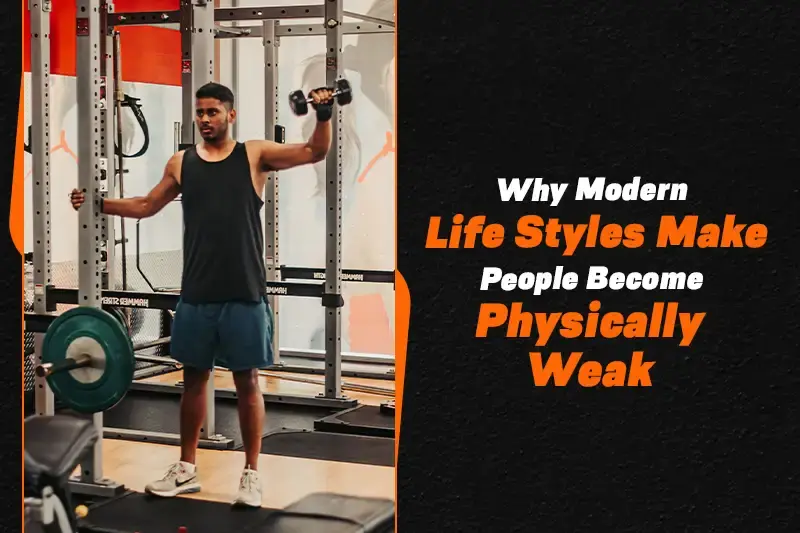
Being physically strong was a necessity one hundred years ago. People would walk for miles to get to work, carry water from wells, cultivate fields, and construct structures by using their physical strength. At present, one does not need to make any efforts to buy food and arrange all the household affairs, since it is possible to go online and order whatever you want without even getting out of bed. It is a comfort, but it is slowly making us physically weak. Have you ever experienced unusual fatigue after buying some food or trying to lift something off the floor? Then this means that your physical condition suffers from the contemporary lifestyle—and the solution to that problem is that more and more Shepparton residents opt for functional training in Shepparton.
This is not because of laziness and unwillingness to train. This is because our environment has changed immensely in just one generation, and our body did not have enough time to adapt to it.
From the dawn of humanity until very recently, physical activity was an inherent part of our existence. Walking, lifting, bending, and carrying objects were essential activities throughout everyday life. Technology has succeeded in taking away all of these needs from us: Cars have replaced walking. Escalators have replaced stairs. Desk jobs have replaced physical work. The chores in the house are done using dishwasher machines, robots, and food delivery applications.
The consequence of all this is a society that is not active like never before. Multiple researches confirm that the average human spends 9-11 hours sitting in a day—at work, in a car, and on a sofa. As for muscles, which were exercised many times each day by performing specific activities such as squatting, hinging, pulling, and carrying objects, nowadays they are not exercised for weeks, sometimes even for months. The lack of activity leads not only to muscle weakness but also to the forgetting of proper muscle firing patterns.
It is not only the fact that the number of calories burned decreases when sitting too much. It actually shortens your hip flexors, weakens your glutes, and brings your shoulders to a forward position. Over the years, this results in a bad posture, which is really harmful structurally speaking. Core muscles that are supposed to keep your back stable get used less and less because the chair does it for you. Over time, this process creates what physiotherapists call "sitting disease," which is a combination of several health problems such as lower back pain, weak glutes, tight hips, and restricted movement in your hips and thoracic spine.
The problem is that it all occurs gradually. You don't wake up one day feeling completely incapable of lifting a suitcase or going upstairs without getting breathless. This happens slowly but steadily, year after year—little stiffness in your back one year and a little difficulty getting up from the floor another year.
In fact, the easier and more comfortable life gets, the more tired and physically weak people are becoming. The reason for such contradiction lies in the fact that the source of vitality and energy is the movement. Muscles, joints, and the cardiovascular system are made to be exercised. The lack of physical activity results in the deterioration of these systems rather than resting.
In this respect, it becomes understandable why functional training in Shepparton has been gaining popularity among those who want to change this situation. While traditional training machines only help strengthen particular muscles, functional training resembles movement patterns in real life. They include squatting, pushing, pulling, twisting, and carrying. Functional training helps restore coordination and strength that have been lost due to the comfortable lifestyle.
Functional training is not for vain pursuits or achieving a certain look. Rather, it is a form of exercise that seeks to restore a normal functioning movement capability in the body. Functional training is a combination of compound movements such as dead lifts, lunges, kettlebell exercises, and rotation exercises that target more than one muscle at once and resemble the movements we make in our day-to-day activities. In addition to building strength, functional training improves balance, coordination, and joint stability, thus lowering the chances of an injury when performing ordinary tasks such as gardening, lifting kids, or climbing up stairs with groceries.
The issue facing many individuals with regard to functional training is not motivation; it is accessibility. Work, work, and work may mean that there is never any time left in a day to go to the gym. This is why 24/7 gym Shepparton becomes so vital.
Another frequent barrier is the perception that training of high quality must be pricey. In fact, a low-cost gym in Shepparton can offer all the tools necessary for recovering functional strength—dumbbells, resistance machines, an open floor, and qualified personnel—at much lower membership rates than many boutique studios would charge. No fancy equipment or program is necessary for training to build strength; only the right approach and dedication to it are important.
Eliminating the financial and time-related barriers is important since the solution to contemporary physical weaknesses is quite simple and accessible—regular movements. The difficulty is in beginning the process.
Undoing the damage that a sedentary lifestyle can cause does not need to be something that requires instantly transforming oneself into a professional athlete. It involves making small but sustained changes that include taking the stairs instead of using the elevator, getting up every hour, and training the body two to three times a week using structured strength workouts.
The human body is highly flexible in both ways. In the same way that inactivity results in weakness and fragility, sustained functional movement creates strength and resiliency within the body faster than expected. The main idea here is treating movement as an absolute necessity of life once again like it was for most of human history.
Life in the modern world has eliminated the need to exert ourselves physically, but in the process, our bodies have become weaker in terms of muscle strength, poor posture, and mobility. Luckily, this problem can easily be corrected by following a certain routine and creating the appropriate environment. Through functional training, scheduling workouts with a 24/7 Shepparton gym, and the cost-effectiveness of an equipment-filled local gym, you can reclaim the lost strength due to modern convenience.
Gaining strength doesn't mean you have to change your appearance dramatically—you just need to develop small but sustainable habits in an appropriate environment. An affordable gym membership in Shepparton combined with functional training can become the key to switching from a weak body to a strong one.

Follow us:-